
Food & Hospitality
Campground Web Design
A design concept for Campground
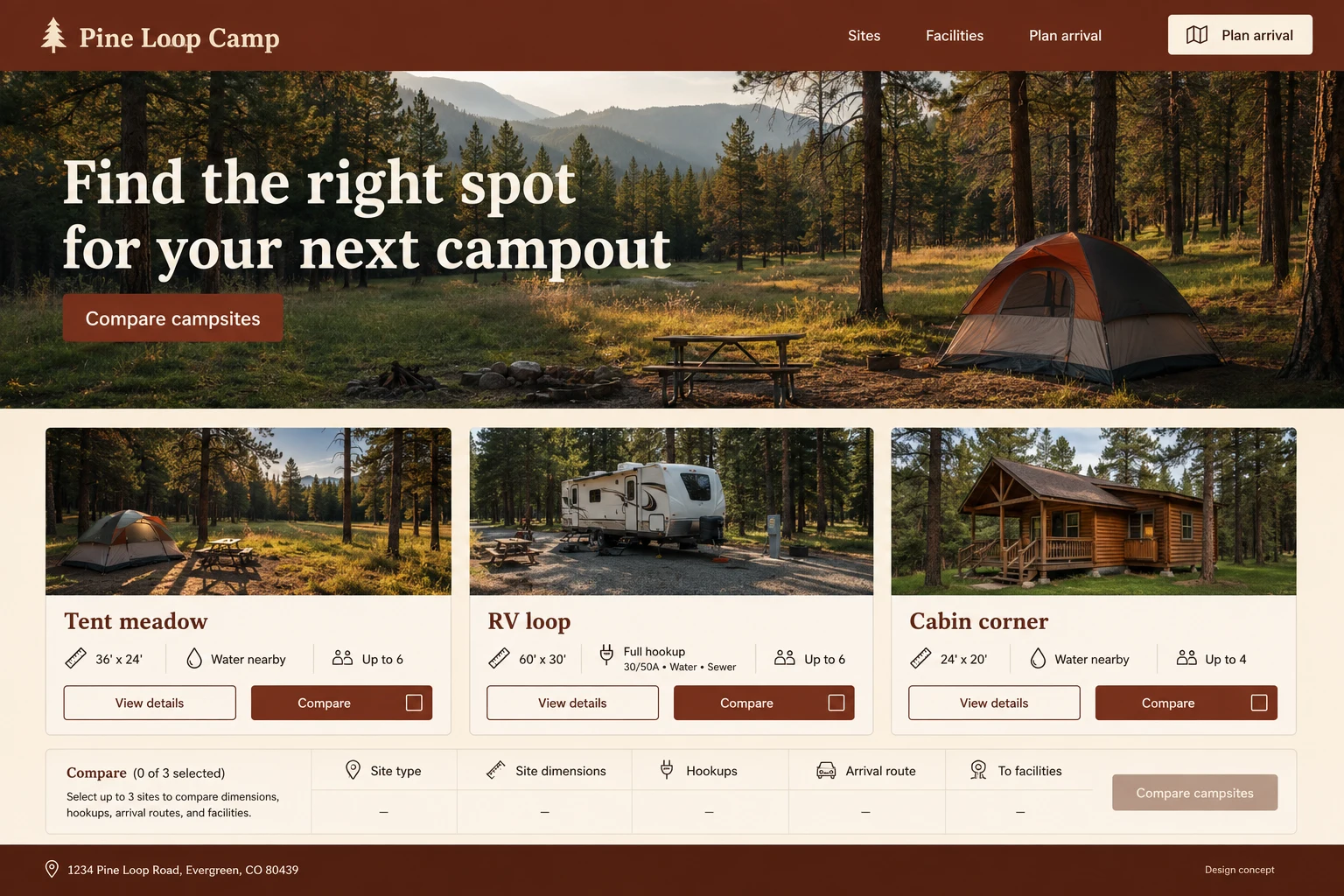
A campground website needs to help campers decide whether a site will work for their equipment and their trip. A scenic photograph may inspire the visit, but dimensions, access, and facilities often determine whether a booking makes sense. Give those practical details the same attention as the landscape.
Describe campsites as usable spaces
Separate tent pitches, RV sites, cabins, or other accommodations the campground actually offers. Publish verified size information, surface descriptions, hookups, and any relevant equipment limits. Explain whether photographs show a specific site or a general area. A camper bringing a larger setup should not have to infer suitability from a distant aerial image.
Show how the campground fits together
A clear site map can connect camping areas, shared facilities, parking, and the arrival point. Pair it with text so important information is not available only inside an image. Use accurate descriptions of showers, toilets, water points, and other amenities, including seasonal availability where relevant. Avoid broad suitability claims when specific facts would help more.
Make arrival planning straightforward
Publish the check-in process, arrival windows, route notes approved by the operator, and the campground's current rules. If a route is unsuitable for certain vehicles, describe the actual guidance the operator provides. Weather-related updates and temporary facility changes need a visible owner and a practical way to reach booked guests.
Connect selection to real availability
A booking system should preserve the selected accommodation or site type and dates. If reservations are handled through inquiry, collect those details plus the equipment information the campground needs to review. Explain that a submitted request is not a confirmed pitch. Do not let a general booking button hide important site restrictions until the final step.
Prepare a launch checklist of site specifications, current facility photos, map information, rules, arrival guidance, and availability procedures. Test a tent weekend and an RV visit separately. Each visitor should be able to work out what they need to ask before committing.
Measure searches by site type, booking completion where available, and inquiries about equipment fit or facilities. Repeated misunderstandings about hookups or pitch dimensions point to missing content. A useful website helps campers choose an appropriate setup and arrive better prepared, without promising that every trip will unfold the same way.
This AI-generated website concept illustrates a fictional business. It is not a completed customer project. Features shown here need to be discussed and scoped for your business.