
Professional & Creative Services
Event Planner Web Design
A design concept for Event Planner
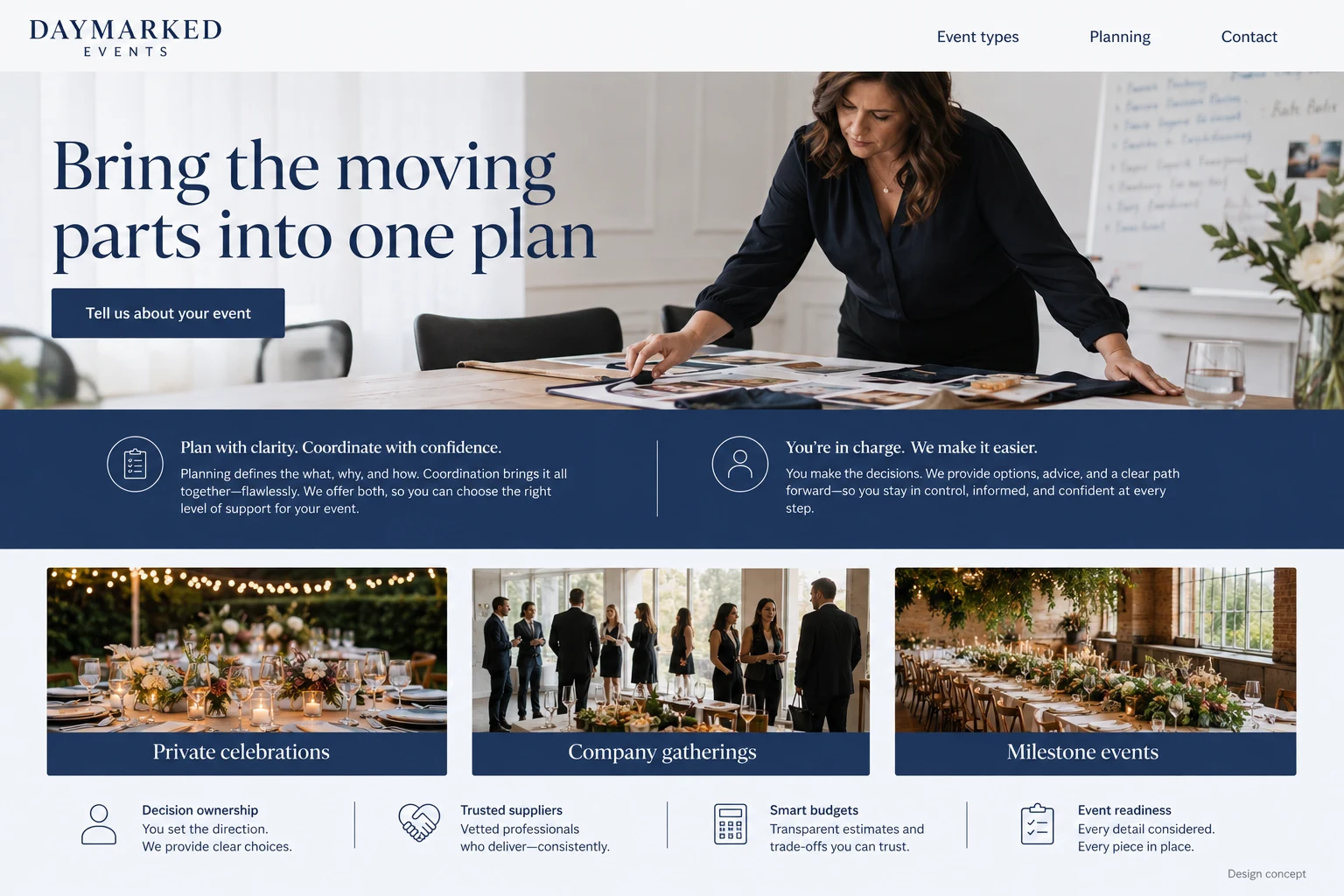
An event planner's website should help an organizer understand where planning support begins and what they still need to decide. Someone arranging a celebration may have a venue and several suppliers; another person may have only a date. Give both a clear way to explain their starting point.
Separate planning from coordination
Describe the actual service areas and the stage at which each becomes relevant. Full planning, specific project support, and event-day coordination are not interchangeable. Explain responsibilities in plain language rather than relying on labels that a first-time client may interpret differently.
Show the work behind the event
Use approved examples that describe the planner's role, event format, and practical challenges addressed. Photographs can show the setting, but a short account of scheduling or supplier coordination makes the service more tangible. Do not imply ownership of every creative element shown when other professionals contributed.
Build an inquiry around readiness
Ask for the event type, proposed date, location, approximate guest count, and arrangements already made. Let clients explain which decisions feel difficult. Budget context may be discussed as part of the real discovery process without publishing invented package prices or implying an event can be planned from headcount alone.
Explain the decision process
Describe how the planner works with the client and suppliers, using actual arrangements. Clarify who approves choices and how scope is agreed. A form receipt should not appear to reserve a date before availability and fit are reviewed.
Prepare service boundaries, approved event examples, role descriptions, and initial planning questions before launch. Test an inquiry from an organizer with a booked venue and another starting from scratch.
Measure inquiries by planning stage, missing event details, and repeated questions about supplier responsibilities. Those patterns can guide more useful explanations. The website should help clients understand the planner's role and start a workable conversation, without suggesting that attractive event photographs prove every future occasion will unfold the same way.
This AI-generated website concept illustrates a fictional business. It is not a completed customer project. Features shown here need to be discussed and scoped for your business.