
Food & Hospitality
Event Venue Web Design
A design concept for Event Venue
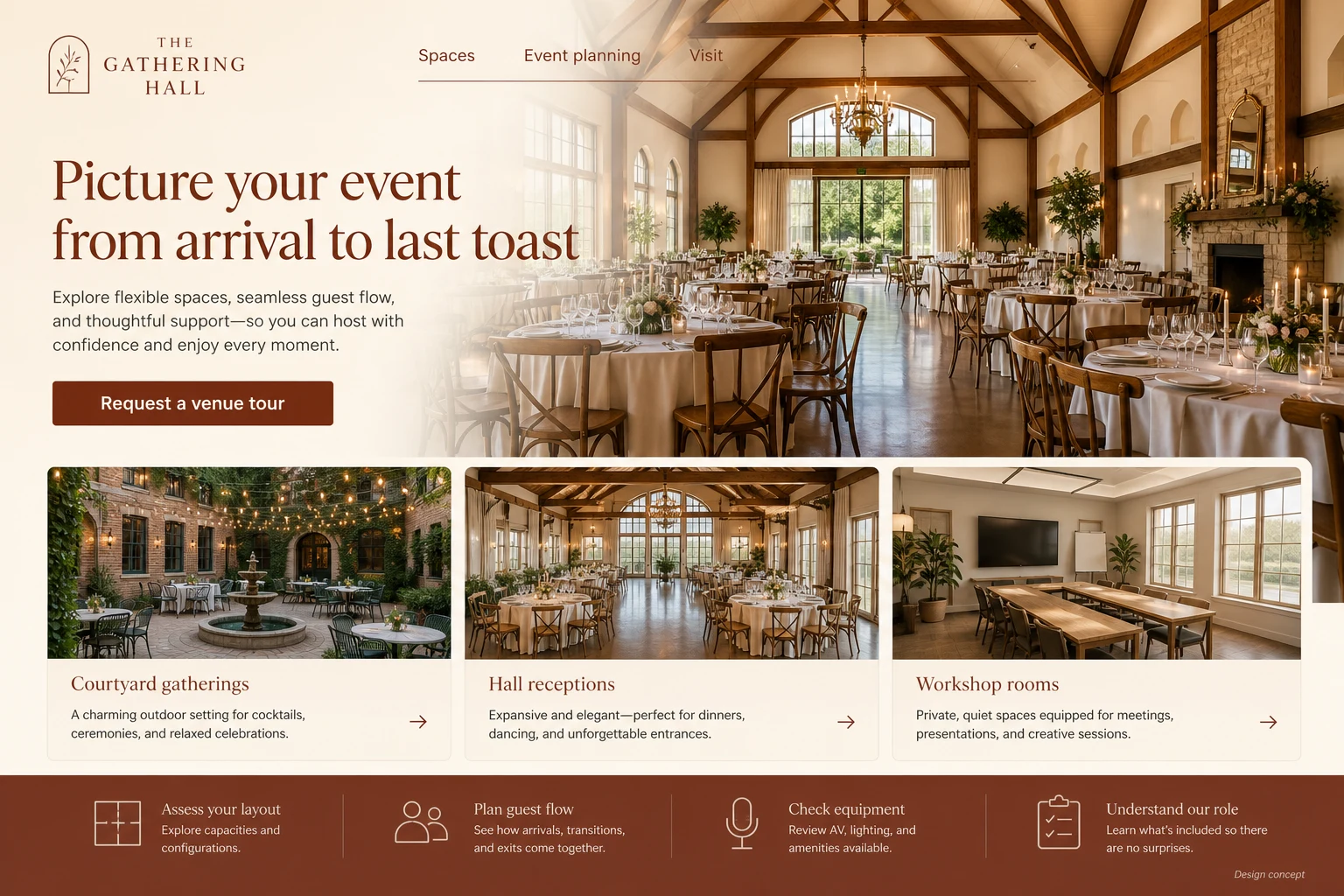
An event venue website should help an organizer picture how people will move through the space. Attractive rooms matter, but so do capacity, layout, arrival, setup, and the responsibilities shared between venue staff and outside suppliers. Give visitors enough detail to decide whether a tour is worth arranging.
Show the spaces in useful configurations
Photograph rooms in different actual setups where possible, with captions explaining what is shown. Publish verified capacity and layout information for the arrangements the venue supports. Do not let one maximum guest number stand in for every event style. A seated meal, a workshop, and a standing reception may use the same room very differently.
Explain what the venue provides
List available furniture, equipment, spaces, and support using current information. Distinguish included items from options that require discussion. Explain the venue's actual approach to outside catering, suppliers, setup access, and cleanup responsibilities. Organizers should not have to infer service boundaries from an image of a fully decorated event.
Help planners prepare a useful inquiry
Ask for the proposed date, event type, guest estimate, and preferred spaces. Give visitors room to describe timing and layout needs without demanding a complete event plan at first contact. Explain whether the next step is an availability review, a conversation, or a site tour. A form receipt should not look like a date reservation.
Make arrival and access visible
Include the correct entrance, parking arrangements, loading information relevant to suppliers, and specific facility details the venue has verified. Keep guest-facing arrival guidance separate from supplier logistics where that improves clarity. Floor plans should remain legible and have accompanying text for important details.
Prepare a launch checklist covering measured room information, real event images, floor plans, equipment records, current venue policies, and inquiry routing. Test the site with someone planning a meeting and someone organizing a celebration. Each should be able to identify the spaces worth discussing.
Measure tour requests, inquiries by event type, and the amount of clarification needed before a visit. Review questions about capacity or supplier responsibilities. A well-planned website can help suitable organizers arrive at the tour with better questions, while leaving availability and event approval to the venue's actual process.
This AI-generated website concept illustrates a fictional business. It is not a completed customer project. Features shown here need to be discussed and scoped for your business.