
Food & Hospitality
Catering Web Design
A design concept for Catering
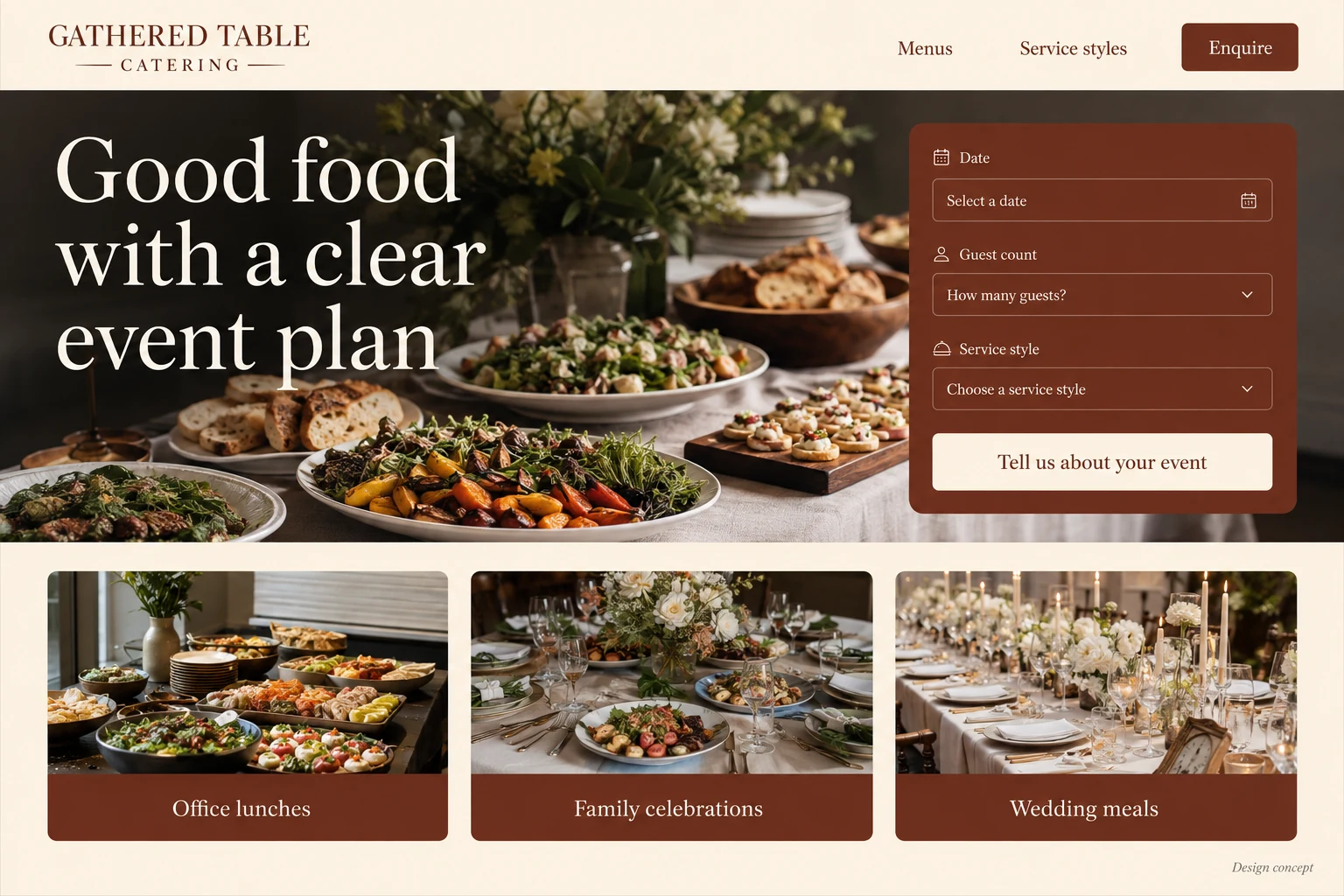
A catering website should help a host describe an event well enough for a productive conversation. Headcount alone rarely tells the whole story. The venue, serving style, timing, and level of help required can all change the plan. Explain those choices before presenting a long inquiry form.
Start with how the meal will be served
Give visitors understandable options such as delivered trays, staffed buffet service, or a seated meal, where those are genuinely offered. Explain what each arrangement involves and which responsibilities stay with the host. Photographs should show the setup as well as the food so organizers can picture tables, serving space, and guest movement.
Turn menus into planning tools
Organize sample menus around the occasion and service style. Explain whether they are fixed selections or starting points for discussion. Include the caterer's own guidance about portions, menu choices, and how to raise dietary questions. Avoid implying that a sample menu is a final proposal for every event size or venue.
Ask the questions that shape a quote
A useful inquiry collects the event date, approximate guest count, venue or location, meal timing, and preferred service arrangement. Give uncertain hosts room to say they need guidance. Ask about known venue restrictions in plain language rather than forcing them through industry terminology. Tell visitors what information the team will review before confirming availability.
Show the handoff from website to event plan
Describe the next conversation, menu review, and decision points without inventing a fixed process the business does not use. Distinguish receiving an inquiry from reserving the date. If tastings, site visits, or equipment arrangements are available, explain when they become relevant instead of presenting them as universal inclusions.
Prepare a launch checklist covering real event photos, current menu examples, service boundaries, inquiry fields, and an internal owner for seasonal updates. Test the form with both a small office lunch and a larger private celebration. The questions should make sense for each, with optional detail where needed.
Measure inquiries by event type, lead time, and whether the information is complete enough to respond. Watch how many exchanges are spent clarifying basics already mentioned on the website. Reducing that back-and-forth can help hosts move toward a workable plan, while keeping expectations grounded in the caterer's actual capacity.
This AI-generated website concept illustrates a fictional business. It is not a completed customer project. Features shown here need to be discussed and scoped for your business.